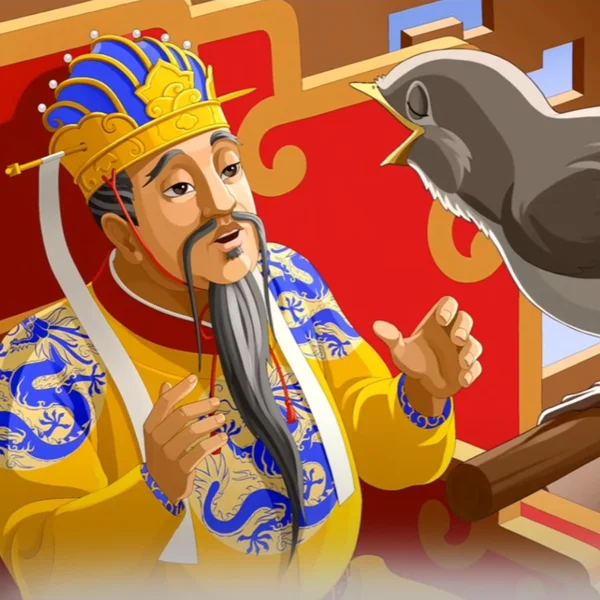
Cover of The Nightingale
The Nightingale
📚
Gratitude 3rd & 4th Grade

Book Guide

The Nightingale

A story that explores gratitude and opens a conversation with your child.

★★★★★ Loved by families
This book teaches: Gratitude. noticing and appreciating what is already good.

Before, During & After Reading

Guiding Questions for Parents.

Definition: A grateful person is thankful for people, nature, and things and is able to make the best of what they have, even if it’s not as much as what others have.  Stewardship means showing  thankfulness for what we have by taking good care of what we’ve been given.  In short: Thankful for every blessing, big or small. Summary: The historical setting of this folktale about an emperor and a nightingale is Ancient China. The emperor, moved by stories of a famous nightingale, commands that the bird be brought to live with him. He enjoys his prize nightingale until he receives a gift of a toy nightingale that is encased in jewels and sings mechanically but beautifully. The real nightingale is forgotten so he returns to his forest home. Eventually the clockwork bird breaks and the emperor gets so sick he is doomed to die.  He is visited by Death and ominous voices until the real nightingale returns. The emperor, moved by the bird’s songs once again, is healed and transformed.    Lesson Objectives: 
  1. What does it mean to “take something for granted”, like the emperor in this story? Students will become more familiar with this phrase and will reflect on how they might take some people and things for granted. 
  2. Students can write a thank you letter to someone in their life for whom they are grateful, letting that person know specifics of why they feel that way. 
  Guiding Questions: 
  1. Why did the emperor command that the nightingale be brought to him? 
  2. What did the nightingale look like? What did the mechanical bird look like? Why did the emperor prefer the mechanical bird? 
  3. Why did the real nightingale fly away from the palace? 
  4. What happened to the emperor after the clockwork bird broke? 
  5. Why do you think the real nightingale returned? 
  6. Do you think the emperor should have been more appreciative of the real nightingale? Why or why not? 
  7.  Are there people in your life who need your appreciation? Who are they and why should they be appreciated?  
  8. Name a person who’s a family member, friend, teacher, or coach, and share about what you could do to express your gratitude for what they do to help you. 
  9.  What is more important to you, how someone looks on the outside or how kind they are to others? Explain your answer.
  10.  Can a person be attractive on the outside but unkind towards others? Can you think of a character in a book or movie like that? 
🌿   Virtue Connection: Gratitude means noticing and appreciating what is already good.

About the Story.

This guide is part of the Values & Virtues library, a free collection of 400+ book guides and activities organized around 12 core virtues for children from pre-K to 6th grade. Each guide includes Guiding Questions designed to open a real conversation with your child in 10 minutes or less.

Read-aloud video · Best with headphones
Explore more guides for 3rd & 4th Grade.