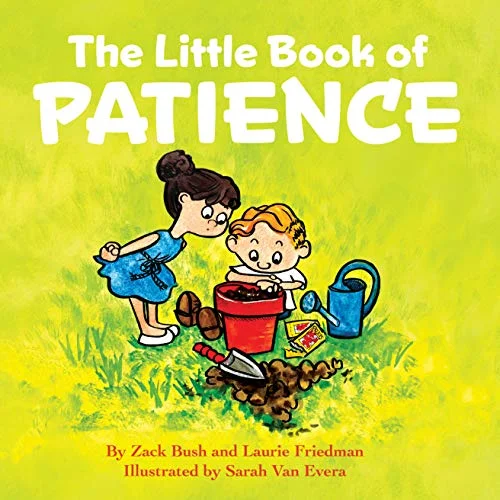
Cover of The Little Book of Patience
The Little Book of Patience
📚
Patience Pre-K & Kindergarten
By Zack Bush

Book Guide

The Little Book of Patience

A story that explores patience and opens a conversation with your child.

★★★★★ Loved by families
This book teaches: Patience. staying calm while something unfolds.

Before, During & After Reading

Guiding Questions for Parents.

Definition: Patience means having self-control, waiting and enduring when one would rather not. In short: Stay calm while you wait. Summary: Practicing patience and self-control is not just about waiting, it's about how you wait. What does it mean to be patient? “Patience means waiting calmly without complaining or getting frustrated…”As we learn how to be more patient we can feel calmer, in control, and proud of ourselves - why? When we are patient it shows that we are respectful of  others and concerned about their happiness.This book offers suggestions for what to do while waiting our turn, or when something takes longer than expected. When life is not what we want it to be, we can remind ourselves that nothing lasts forever and instead of worrying, we can think about what makes us happy. If we’re impatiently waiting for a special event, there are activities we can do that make time pass more quickly. Children will be able to relate to the examples in this book of “patience challenges” and they will gain applicable knowledge on how to handle them.     Lesson Objectives:
  1. Students demonstrate more awareness of why it’s important to practice self-control and how to control themselves when they become impatient. 
  2. Teachers can help students practice patience by guiding them to create fun skits that illustrate patience versus impatience. 
  Guiding Questions: 
  1. What does it mean to be patient? 
  2. What’s one thing you can do when you have to wait your turn? 
  3. When something takes a long time, think about something that makes you happy. Name three things that make you happy. 
  4. “Things won’t stay that way forever” - say this to yourself next time you have to wait for something. Did it help you?  
  5. Have you ever been impatient when you were sick or when a younger sibling was upset? What happened? 
  6. Is it hard to be patient when learning to read, ride a bike or play a musical instrument? 
  7. When you have to listen without interrupting, is it hard for you? Why or why not? 
  8. Is it hard to sit still when you have to? 
  9. What do you like to do when you have to wait? 
  10. Patience is not just about waiting, it’s about….(Fill in the blank)Why is it important to learn how to be patient? 
🌿   Virtue Connection: Patience means waiting without losing yourself.

About the Story.

This guide is part of the Values & Virtues library, a free collection of 400+ book guides and activities organized around 12 core virtues for children from pre-K to 6th grade. Each guide includes Guiding Questions designed to open a real conversation with your child in 10 minutes or less.

Read-aloud video · Best with headphones
Find this book at your library or bookstore →

Explore more guides for Pre-K & Kindergarten.