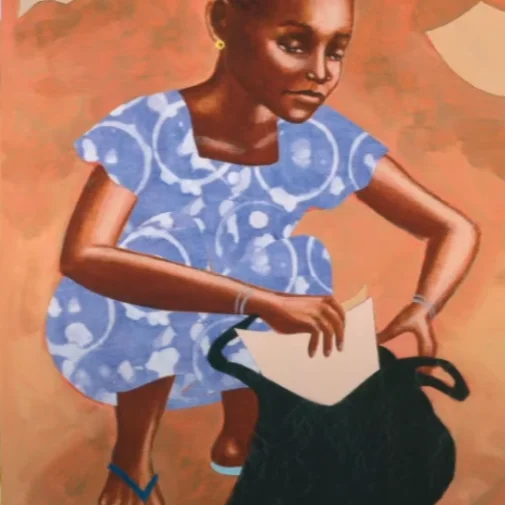
Cover of One Plastic Bag
One Plastic Bag
📚
Gratitude 3rd & 4th Grade
By Miranda Paul

Book Guide

One Plastic Bag

A story that explores gratitude and opens a conversation with your child.

★★★★★ Loved by families
This book teaches: Gratitude. noticing and appreciating what is already good.

Before, During & After Reading

Guiding Questions for Parents.

Definition:  A grateful person is thankful for people, nature, and things and is able to make the best of what they have, even if it’s not as much as what others have.  Stewardship means showing  thankfulness for what we have by taking good care of what we’ve been given.  In short: Thankful for every blessing, big or small. Summary: This is the true story of a very resourceful woman, Isatou Ceesay from the Gambia in Africa. In her adult life, she becomes concerned about the plastic bags that litter the village where she lives. When her sister teaches her to crochet, she realizes that these plastic bags can be collected, washed, cut into strips and crocheted to make purses and other items to sell. She creates a business with other women in her community, giving them a way to make money and be honored for their contributions to restoring the land.    Lesson Objectives: 
  1. This story helps students open their eyes wider to see and believe that every problem has a solution, just like in the story. 
  2. This can be a class mantra: “let’s be grateful for our brains and each other because when we put our brains together and brainstorm we’ll find a way.”
  3. Students will become better problem solvers as they remind each other of the class mantra and help each other. 
  Guiding Questions: 
  1. Why does Isatou decide to use plastic bags instead of the traditional baskets? What happens when the plastic bag breaks? 
  2. She likes plastic bags at first but changes her mind, why?  
  3. Why are plastic bags bad for goats? Can you think of other examples of why the things we throw away are bad for animals? 
  4. What does Isatou’s sister teach her to do? 
  5. Isatou and her people think the plastic bags are ugly and useless - the bags  are scattered everywhere littering their village. What changes her mind about the bags? 
  6. What is it that the women of Isatou’s village do to improve their own lives and to improve the village? 
  7. What does Isatou buy with the money she makes? 
  8. Isatou was able to find a useful purpose for the plastic bags. Have you ever reused something that was to be recycled? If so, share about what you did. If not, make a plan to reuse something. 
  9. Be an environmental detective and find something that you could do to improve your neighborhood, like picking up trash, planting a tree (get some help from your parents or teacher), or planting flowers that attract pollinators (get some help from your parents or teacher).
  10.  More detective work! Look around your house and see if there is anything you could do to encourage your family to reuse, waste less, and conserve energy. Talk about it with family members. 
🌿   Virtue Connection: Gratitude means noticing and appreciating what is already good.

About the Story.

This guide is part of the Values & Virtues library, a free collection of 400+ book guides and activities organized around 12 core virtues for children from pre-K to 6th grade. Each guide includes Guiding Questions designed to open a real conversation with your child in 10 minutes or less.

Read-aloud video · Best with headphones
Find this book at your library or bookstore →

Explore more guides for 3rd & 4th Grade.