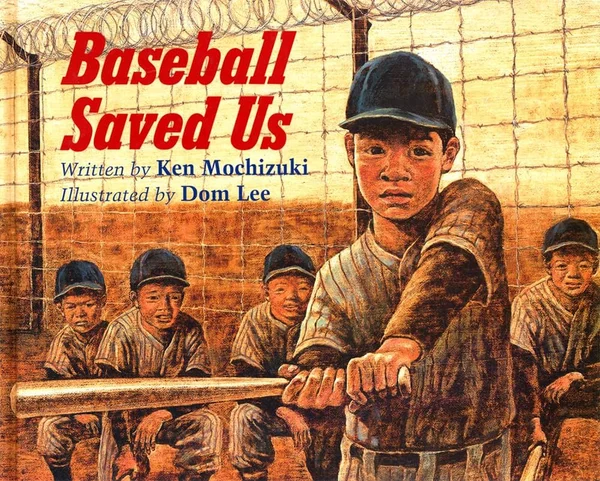
Cover of Baseball Saved Us
Baseball Saved Us
📚
Respect 5th & 6th Grade

Book Guide

Baseball Saved Us

A story that explores respect and opens a conversation with your child.

★★★★★ Loved by families
This book teaches: Respect. seeing the worth in every person.

Before, During & After Reading

Guiding Questions for Parents.

Definition: Respect is acting with kindness, politeness, and consideration of the other, having good manners and treating all things carefully.  In short: Value others, honor differences. Summary: Readers will learn about a sad time in American history from the narrator, a Japanese American boy in an internment camp during WWII. Japanese American families were forced to leave their homes and live in these camps because America was at war with Japan and Japanese American families weren’t trusted by the government. The adults at the camp decided to build a baseball field so the kids would have something to do. The narrator, nicknamed “Shorty”, became a skilled batter during that time, and when his family was allowed to return to their home after the war, he joined a baseball team. Even though he was treated badly because he was Japanese, he won the game for his team with an awesome hit.    Lesson Objectives: 
  1. Students will be less inclined to make fun of others and more willing to make friends with those who come from a different racial or ethnic group. 
  2. This story can be a lead-in to academic studies of WWII history, in particular the internment of Japanese American citizens. 
  Note to teachers: Before reading this story, it may be helpful to explain why the American government set up internment camps for Japanese families. Internment camps were set up during WWII because the American government was at war with Japan and leaders were concerned that Japanese Americans might cause problems.  Japan attacked the U.S.A at Pearl Harbor in Hawaii and that was the beginning of America’s involvement in the war. Japanese American families suffered many hardships in the internment camps and after the war ended.    Guiding Questions: 
  1. Why did the narrator’s family move out of their home into an internment camp? 
  2. Look at the pictures and read the description about the camp. Where was it located? What kind of housing did they have? How did they eat, go to the bathroom? 
  3. Could the people in the camp leave whenever they wanted to? 
  4. Why did the adults decide to create a baseball field? 
  5. Who was the “man in the tower” and what was his job?
  6. Why did the narrator say that life after camp was still difficult, even though they got to go home? 
  7. The boy was ridiculed and “hated” just because he was Japanese. Do you think that's fair? Why or why not? 
  8. If you attended that school back then, what could you have done to help him feel included? 
  9. Has anyone ever made fun of you because of your race, your ethnic background, your appearance? What happened? 
  10. Have you ever made fun of someone because of their race, ethnic background or appearance? How did you feel afterwards? If you never did that, explain why you made that choice.
 
🌿   Virtue Connection: Respect means seeing the worth in every person.

About the Story.

This guide is part of the Values & Virtues library, a free collection of 400+ book guides and activities organized around 12 core virtues for children from pre-K to 6th grade. Each guide includes Guiding Questions designed to open a real conversation with your child in 10 minutes or less.

Read-aloud video · Best with headphones
Explore more guides for 5th & 6th Grade.