Cover of Emmanuel's Dream
Emmanuel's Dream
📚
Hope 3rd & 4th Grade
By Laurie Ann Thompson

Book Guide

Emmanuel's Dream

A story that explores hope and opens a conversation with your child.

★★★★★ Loved by families
This book teaches: Hope. believing that things can get better.

Before, During & After Reading

Guiding Questions for Parents.

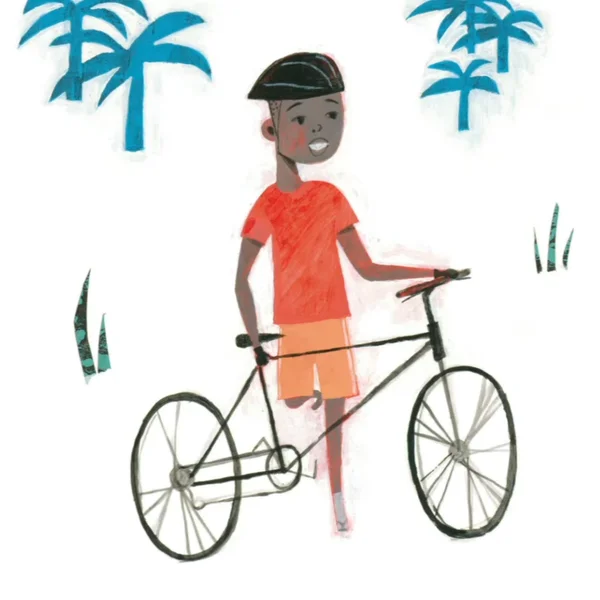
Definition: To be hopeful means to believe that something good can happen, even when it doesn’t look like it, or when it turns out differently than expected. In short: Believe that something good can happen. Summary:  This is a true story about a boy from Ghana, West Africa, who was  born with a defective leg.  Emmanuel Ofosu Yeboah had a big dream to rise above his disability and live a productive and amazing life. He became a role model, an activist for the handicapped, and a national hero as he cycled 400 miles in 10 days throughout Ghana. In this way he challenged stigmas that devalued the handicapped. He proved that a disabled person with a vision and the will to accomplish it can achieve anything.  Lesson Objectives: 
  1. Teachers guide students in a research project to find out what their community does to support and encourage people with disabilities. 
  2. A social worker who helps the disabled can be invited to share about their experience, especially how they encourage and give hope to the people they serve. 
Guiding Questions: 
  1. What was Emmanuel’s disability and what did his mother do to support him to do things that were difficult?
  2. How did Emmanuel earn the respect of his classmates?
  3. What happened to Emmanuel when he was 13, and what did he do to handle that crisis? 
  4. Emmanuel could have made money by begging but he refused to do that. Why? 
  5. What advice did Emmanuel's mother give him on her deathbed?
  6. How did the Challenged Athletes Foundation help Emmanuel with his desire to be a role model for the disabled? 
  7. What did Emmanuel do to get the support he needed to take the historic bike ride? 
  8.  Have you ever thought about what it would be like to have a handicap? Experiment by tying one arm so you can’t use it. Try eating breakfast and brushing your teeth. Was it difficult? 
  9. Brainstorm with your parents or teacher about a cause that means something to you. Find a way to support it. 
  10. Take some time to notice how your community supports those who are handicapped. Are there paved sidewalks without bumps and cracks for wheelchairs? Do bathrooms have a stall for handicapped people? Is there parking for the handicapped? Do playgrounds have structures for handicapped children?  
 
🌿   Virtue Connection: Hope means believing that what comes next can be better.

About the Story.

This guide is part of the Values & Virtues library, a free collection of 400+ book guides and activities organized around 12 core virtues for children from pre-K to 6th grade. Each guide includes Guiding Questions designed to open a real conversation with your child in 10 minutes or less.

Read-aloud video · Best with headphones
Find this book at your library or bookstore →

Explore more guides for 3rd & 4th Grade.