Hands-On Practice
Activities for This Story.
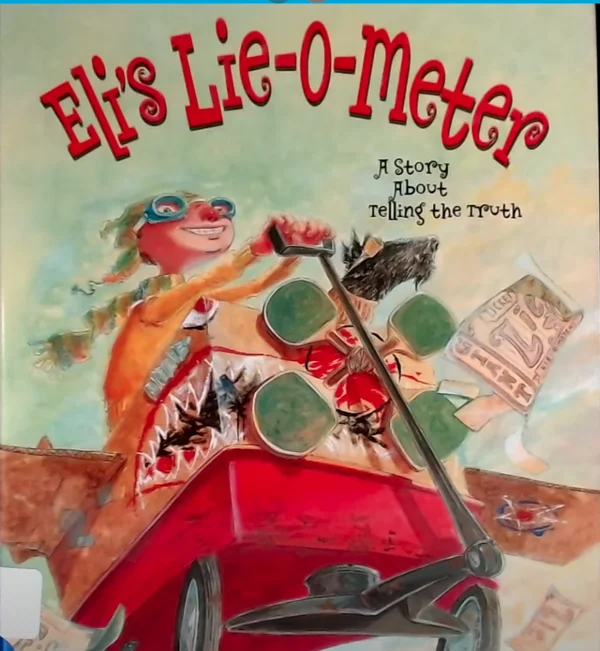
Activity: Students review the story “Eli’s Lie-O-Meter,” and are asked to consider whether or not humans have their own invisible lie detector - do we all have something that tries to keep us from lying and making bad decisions? (the answer is yes, because everyone is born with a conscience) The children are guided to compare the human conscience with a computer in which information is inputted, analyzed, and an answer is outputted. Students create a facsimile “computer.” They are directed to tape 3 blank papers together, long sides next to each other - each has a heading: (1)input, (2) analysis, (3)output. Note to teacher: if the students are not yet able to write they can do this activity orally. Each pair of students is given a written scenario that needs problem solving. The pairs analyze the choices, then select the best one (according to the voice of the conscience) and write it in the output column. Students present their results in a show and tell. The activity can be repeated with new scenarios created by the teacher or suggested by the students.
Materials needed: the video; blank paper, 3 sheets per pair; writing instruments; tape, glue; teacher prepared scenarios (see below for ideas), at least two per pair of students - write them out on index cards or small pieces of paper
Suggested scenarios: What will you do if you…(1) find some money and it’s not yours, (2) break something at home that belongs to your parents or a sibling (3) spill something on someone’s clothes but they don’t see you do it, (4) trip someone on the playground accidentally and they angrily asked who did that, (5) are tempted to eat a treat that your mom told you she’s saving for after dinner, (6) lose something valuable and you know your parents will be angry about it, (7) forget to prepare for a test and you can see the paper of the person next to you, (8) your friend asks you to lie, (9) someone tries to get you to steal something, (10) you break the neighbor’s window when you were playing ball but they don’t know it was you.
Directions: Review the story “Eli’s Lie-O-Meter,” and ask students to consider whether or not humans have their own personal “lie detector" - do we all have something that prevents us from lying and making bad decisions? Point out that every person has a conscience, an invisible part of us that helps us make decisions. Explain that our conscience is like a quiet voice inside of our mind; it’s not exactly like a cricket talking to us as in the Pinocchio story, but it’s similar in that it warns us - “if you do this, something good will happen, if you do that, something bad will happen.” Invite students to share about any experiences they’ve had in which they “heard” this voice. Describe how the conscience helps us think about what to do when we have to decide something that is related to what we believe about right and wrong. Explain how the job of the conscience is to (a) analyze the “input” or details of the situation; (b) remind us of the different ways we could react, and (c) encourage us to react in a way that is aligned with our values - what is best for everyone, including ourselves. Ask students to memorize this statement: good choices feel good! Explain the exercise: “You will work with your partner and make a pretend computer on this paper. Tape 3 blank papers together, long sides next to each other - give each a heading: (1) Input - the situation, (2) Analysis - good choice versus bad choice, and (3) Output - best possible choice.” Give each pair a scenario, instruct the pairs to tape or glue it under the heading “Input.” Tell students to analyze the situation and write under “Analyze” one good choice and one bad choice and the consequences of each. Direct students to fill in the “Output” section of the “computer.” Repeat the activity with a new scenario for each pair. Conduct a show and tell in which each pair explains what they did and why.
Wrap it up: Explain that the purpose of this exercise is to grow our integrity - how? We develop more awareness of the voice of our conscience; we become more skillful in assessing the consequences of our actions; we can make better decisions and choose to follow our conscience instead of doing something that may cause harm to others and ourselves. Repeat this activity several times so that students can practice the skill of following one’s conscience.